Artificial intelligence is transforming how businesses approach marketing. From writing blog posts and optimizing SEO content to generating ad creatives and automating workflows, AI marketing tools now help teams work faster, smarter, and more efficiently than ever before.
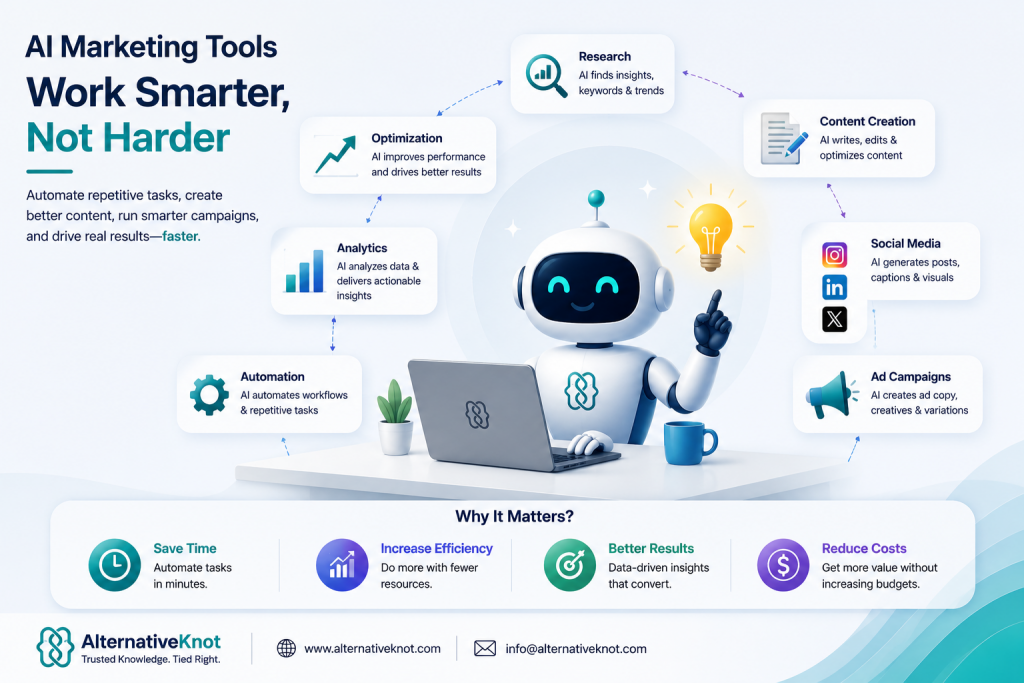
Instead of manually researching keywords, drafting content, scheduling posts, and analyzing campaigns, marketers can now rely on AI platforms that automate repetitive tasks while improving performance insights. This shift allows creators, freelancers, agencies, and startups to scale their marketing efforts without increasing workload or budgets.
In this guide from AlternativeKnot, we explore the best AI marketing tools available in 2026 across multiple categories including SEO optimization, content writing, social media automation, paid advertising, video creation, and marketing workflows. Whether you’re a blogger, freelancer, or marketing team, this curated list will help you choose the right tools for your strategy.If you’re primarily focused on writing workflows, you may also want to explore our detailed comparison of AI writing tools for freelancers, where we break down the best platforms for content creators.
Want Us to Test an AI Tool for You?
Tell us which platform you’re considering — we’ll analyze it and include it in upcoming comparisons
Request a Tool ReviewComparison Table: Best AI Marketing Tools
| Tool | Category | Best For | Key Strength | Pricing Model |
| Scalenut | SEO + Writing | Long-form SEO content | Topic clusters + Cruise Mode | Paid |
| Surfer SEO | SEO Optimization | Content scoring | Real-time SERP scoring | Paid |
| Frase | SEO Research | Content briefs | SERP question extraction | Paid |
| NeuronWriter | SEO Optimization | Budget SEO | NLP keyword suggestions | Paid |
| Outranking | SEO Workflow | Automated briefs | Workflow automation | Paid |
| MarketMuse | Enterprise SEO | Topic authority | Content gap analysis | Custom |
| Clearscope | Content Optimization | Keyword grading | Clean scoring interface | Premium |
| Jasper | AI Writing | Marketing content | Brand voice control | Paid |
| Writesonic | AI Writing | Blog + SEO content | Chatsonic + templates | Paid |
| Copy.ai | Copywriting | Short-form campaigns | Workflow builder | Free + Paid |
| Rytr | AI Writing | Budget writers | Simple interface | Free + Paid |
| Anyword | Conversion Copy | Performance marketing | Predictive scoring | Paid |
| QuillBot | Editing | Rewriting content | Paraphrasing engine | Free + Paid |
| Predis.ai | Social Media | Auto post generation | Visual + caption AI | Paid |
| Ocoya | Social Scheduling | Social automation | Caption + scheduling | Paid |
| Buffer AI | Social Scheduling | Content planning | AI suggestions | Free + Paid |
| Lately.ai | Social Repurposing | Blog → social posts | Content repurposing | Paid |
| AdCreative.ai | Paid Ads | Ad creatives | Conversion score prediction | Paid |
| Pencil AI | Paid Ads | Creative testing | Fast ad variations | Paid |
| Phrasee | Email Marketing | Subject lines | AI language optimization | Enterprise |
| Pictory | Video Marketing | Blog → video | Text-to-video automation | Paid |
| Synthesia | Video Creation | AI presenters | Avatar-based videos | Paid |
| Descript | Video Editing | Podcast/video editing | Text-based editing | Free + Paid |
| Zapier | Automation | Workflow automation | App integrations | Free + Paid |
| HubSpot AI | CRM Automation | Full marketing stack | Campaign automation | Free + Paid |
| ActiveCampaign | Email Automation | Customer journeys | Behavioral automation | Paid |
| GetResponse | Funnel Automation | Email + webinars | AI campaign builder | Free + Paid |
| Mailchimp AI | Email Marketing | Campaign automation | Predictive segmentation | Free + Paid |
Categories Covered in This Guide
We grouped tools into six marketing categories:
• AI SEO tools
• AI writing tools
• AI social media tools
• AI ad tools
• AI video tools
• AI automation platforms
This structure helps marketers choose tools based on workflow needs.
Best AI SEO Marketing Tools
1. Scalenut
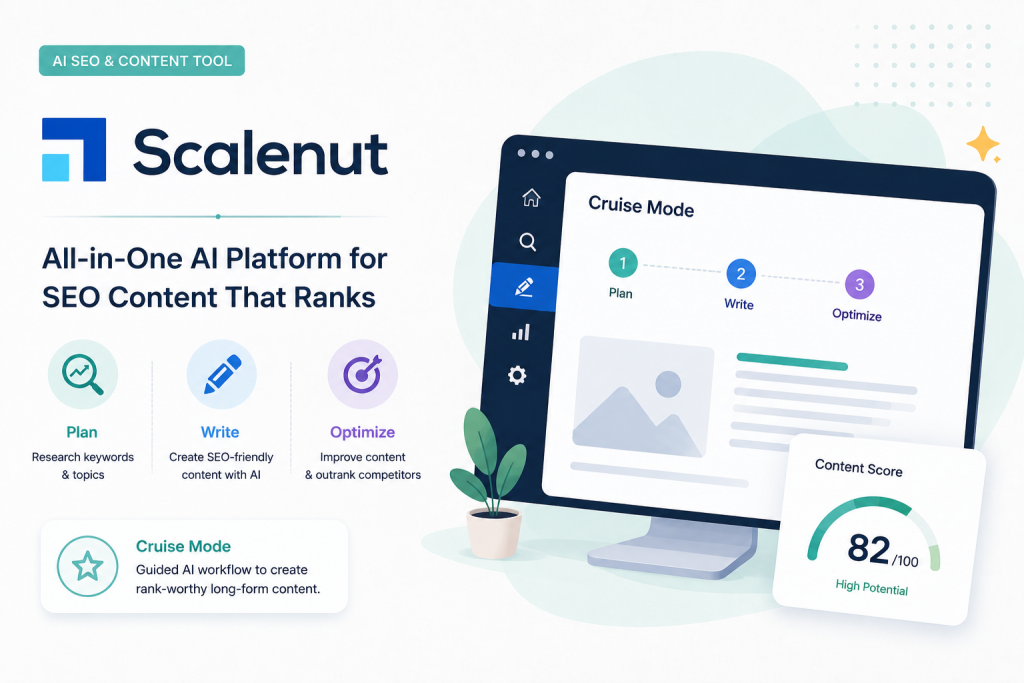
Scalenut is an all-in-one AI SEO platform that helps marketers plan, write, and optimize long-form content using data-driven insights. It combines keyword research, topic clustering, and AI-assisted writing inside a single workflow, making it easier to create search-friendly content without switching between multiple tools.
Its Cruise Mode feature guides users step-by-step through article creation based on competitor analysis and search intent, which makes it especially helpful for scaling blog content efficiently.
If you want a broader comparison, you can also explore our complete guide on Scalenut alternatives
Key Features
• Cruise Mode long-form article generation
• NLP keyword optimization suggestions
• topic clustering support
• content scoring recommendations
• SERP-based content insights
Pros
• combines SEO research and writing
• helpful for long-form content workflows
• supports topical authority building
Cons
• fewer integrations than some competitors
• optimization scoring lighter than Surfer SEO
Best For
Bloggers, affiliate marketers, and content teams creating SEO-focused long-form content efficiently.
2. Surfer SEO
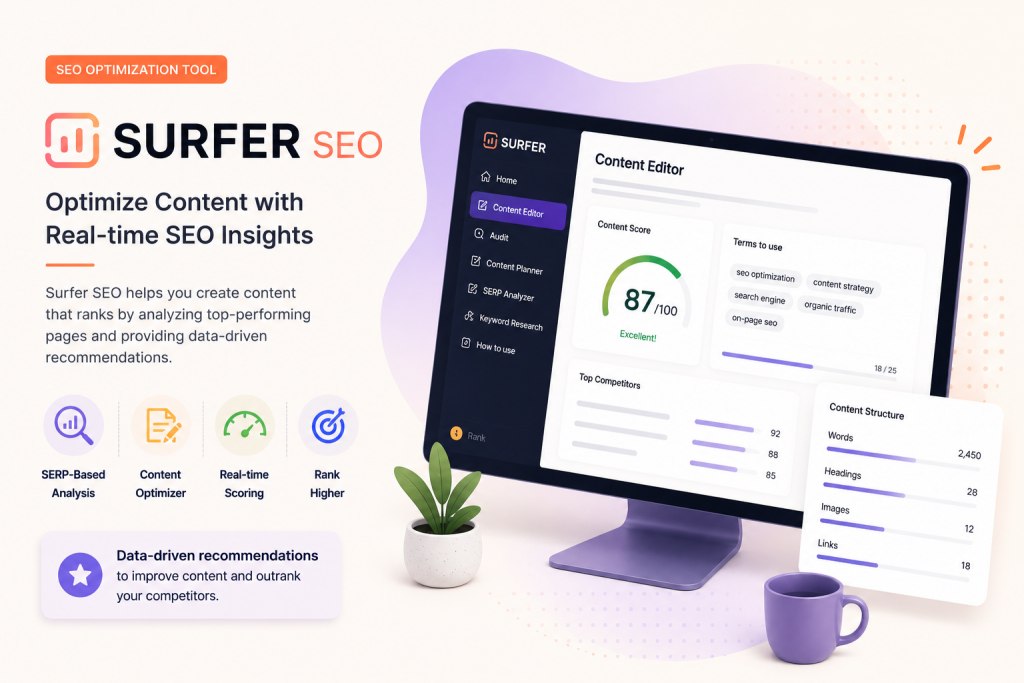
Surfer SEO is one of the most popular content optimization platforms used by marketers who want data-driven recommendations before publishing articles. Instead of guessing what Google prefers, Surfer analyzes top-ranking pages and provides actionable insights about keywords, headings, structure, and content length.
It works especially well when paired with AI writing tools because it helps refine drafts into search-optimized content ready for ranking.
Key Features
• real-time SEO content scoring
• SERP-based keyword recommendations
• competitor benchmarking
• content editor optimization workflow
• Google Docs + AI integrations
Pros
• highly accurate ranking signals
• strong agency adoption
• real-time optimization feedback
Cons
• slightly expensive for beginners
• requires basic SEO understanding
Best For
SEO professionals, agencies, and bloggers optimizing ranking-focused articles.
3. Frase
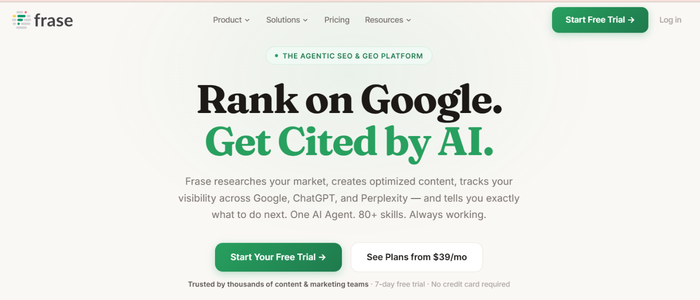
Frase helps marketers understand search intent faster by automatically analyzing top-ranking pages and extracting key questions, headings, and competitor insights. Instead of manually researching SERPs, users can generate structured content briefs within minutes.
If you want a broader comparison, you can also explore our complete guide on Frase alternatives comparison guide
This makes Frase particularly effective for planning high-ranking blog outlines efficiently.
Key Features
• automated SERP analysis
• AI-generated content briefs
• question-based keyword discovery
• outline generation tools
• optimization suggestions
Pros
• excellent for research workflows
• simplifies competitor analysis
• strong search intent insights
Cons
• fewer long-form writing features than Scalenut
• optimization scoring less advanced than Surfer
Best For
Affiliate bloggers and SEO writers focused on structured content planning.
4. NeuronWriter
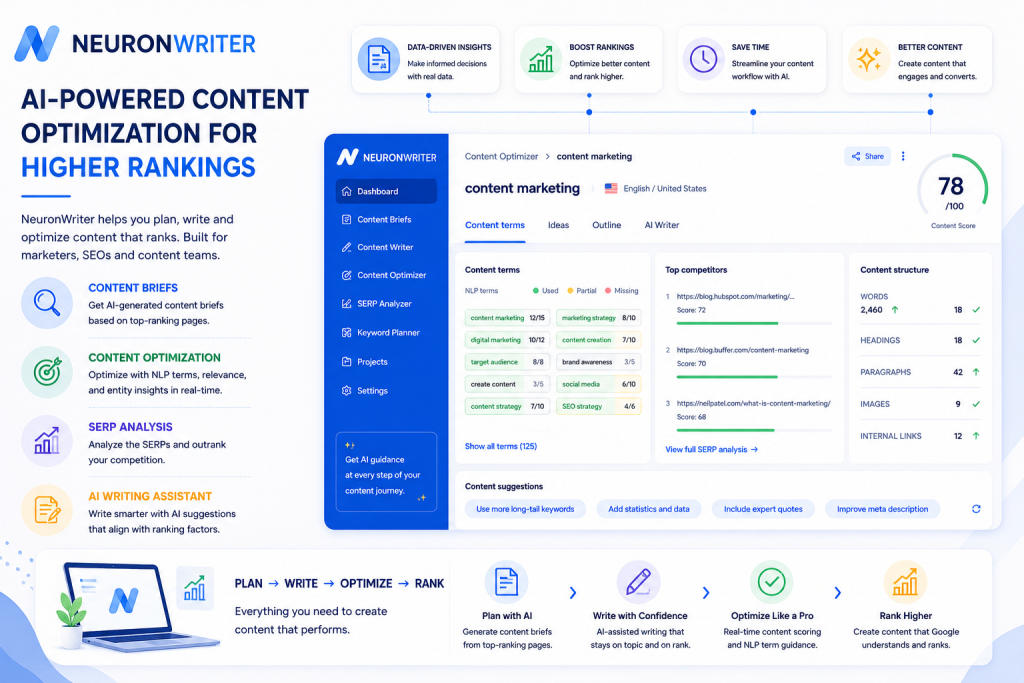
NeuronWriter is a budget-friendly content optimization platform that uses NLP-based keyword suggestions to improve article relevance and search performance. It provides competitor comparisons and scoring recommendations similar to premium tools but at a lower cost.
This makes it ideal for freelancers who want powerful SEO assistance without enterprise pricing.
Key Features
• NLP keyword recommendations
• competitor comparison insights
• content scoring system
• optimization suggestions
• internal linking guidance
Pros
• affordable pricing
• beginner-friendly interface
• strong keyword coverage insights
Cons
• smaller ecosystem than competitors
• limited automation features
Best For
Freelancers and niche site creators improving on-page SEO.
5. Outranking
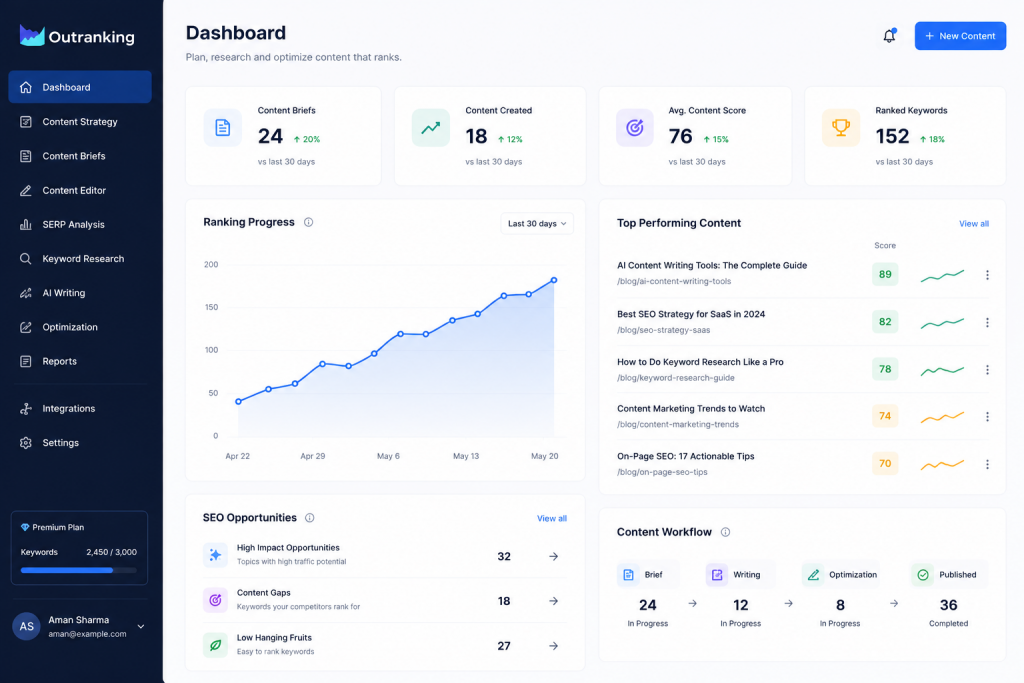
Outranking is designed to automate SEO workflows by combining research, outlining, writing, and optimization inside one platform. Instead of switching between multiple tools, marketers can manage entire content pipelines from one dashboard.
This makes it especially useful for teams managing large content calendars.
Key Features
• automated content briefs
• keyword clustering support
• optimization recommendations
• workflow automation
• structured outline generator
Pros
• reduces manual research time
• helpful for scaling production
• supports collaboration workflows
Cons
• smaller community support
• learning curve initially
Best For
Content teams managing multiple SEO campaigns simultaneously.
6. MarketMuse
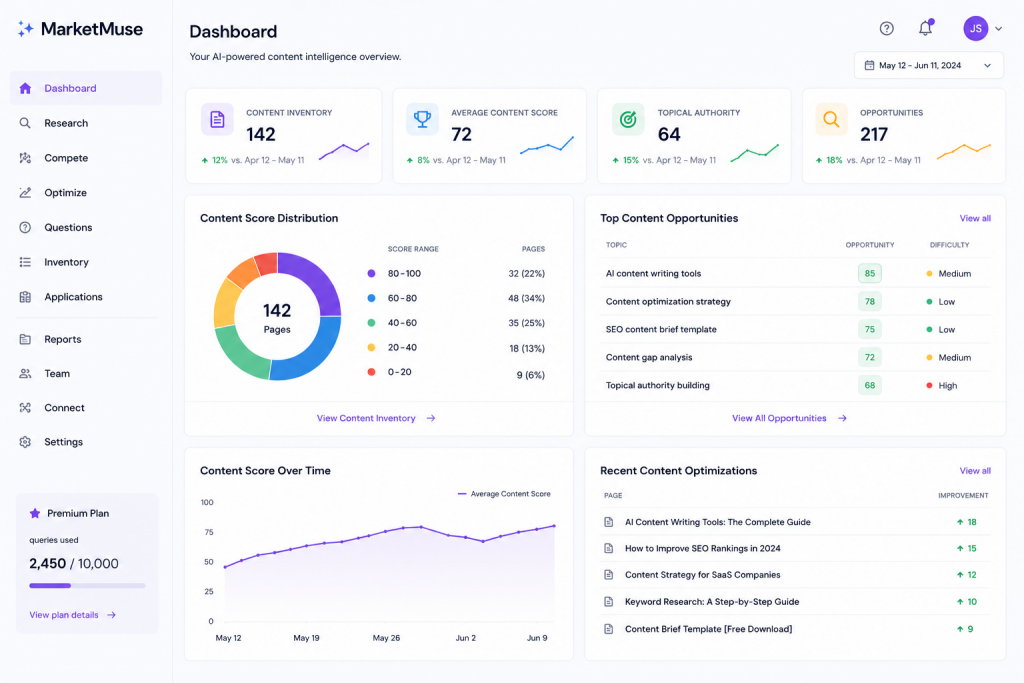
MarketMuse focuses on long-term content strategy instead of individual article optimization. It identifies topic gaps across your website and suggests opportunities to strengthen authority within a niche.
This makes it especially valuable for businesses building topical depth at scale.
Key Features
• topic gap analysis
• authority scoring
• content planning insights
• keyword relevance modeling
• strategy recommendations
Pros
• powerful strategic insights
• improves topical authority
• ideal for scaling SEO coverage
Cons
• expensive for small teams
• advanced interface
Best For
Enterprises and agencies building large SEO content ecosystems.
7. Clearscope
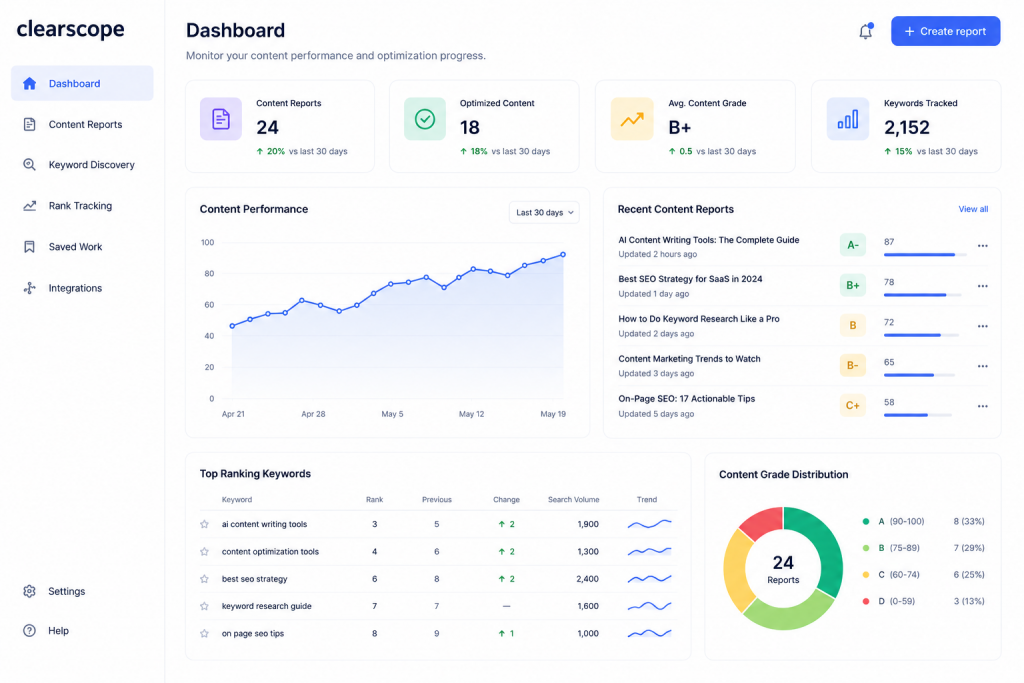
Clearscope is a premium optimization platform known for its clean interface and reliable keyword suggestions. Instead of overwhelming users with technical data, it focuses on clarity and usability.
This makes it popular among professional writers producing high-quality editorial content.
Key Features
• keyword relevance scoring
• readability insights
• competitor keyword coverage
• grading system
• content editor interface
Pros
• simple interface
• strong keyword accuracy
• trusted by agencies
Cons
• higher pricing tier
• fewer automation features
Best For
Editorial teams optimizing long-form articles.
Want to Rank Content Faster Without Guesswork?
AI SEO tools help analyze competitors, structure articles, and improve ranking potential.
👉 Discover the Best AI SEO ToolsBest AI Writing Marketing Tools
8. Jasper
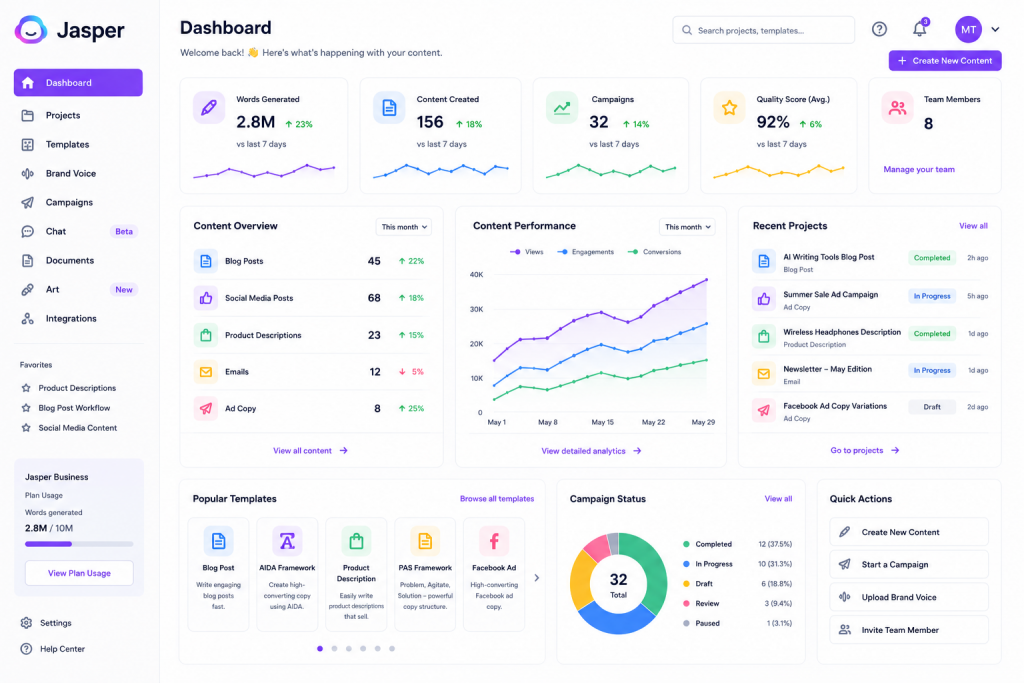
Jasper is one of the most widely used AI marketing writing platforms for generating blogs, landing pages, and campaign messaging at scale. It allows teams to maintain consistent tone through brand voice memory and collaboration workflows.
For a deeper comparison of similar marketing writers, explore our curated list of Jasper alternatives.
This makes Jasper ideal for companies producing multi-channel marketing content.
Key Features
• long-form blog generator
• campaign copy templates
• brand voice memory
• collaboration workflows
• marketing-focused prompts
Pros
• strong marketing outputs
• scalable workflows
• high-quality content tone
Cons
• limited built-in SEO scoring
• higher pricing than competitors
Best For
Marketing teams producing brand-consistent content
9. Writesonic
Writesonic combines blog generation, landing page writing, and chatbot-style AI assistance inside one platform. It supports marketers who want fast drafts with optional SEO support.
If you’re evaluating similar writing platforms, check our full list of Writesonic alternatives.
Its flexibility makes it especially useful for startups and freelancers.
Key Features
• AI article writer
• landing page templates
• Chatsonic assistant
• SEO-friendly workflows
• multi-language support
Pros
• beginner-friendly interface
• affordable plans
• versatile writing workflows
Cons
• requires editing for polish
• optimization depth limited
Best For
Freelancers and founders producing blog content quickly.
10. Copy.ai
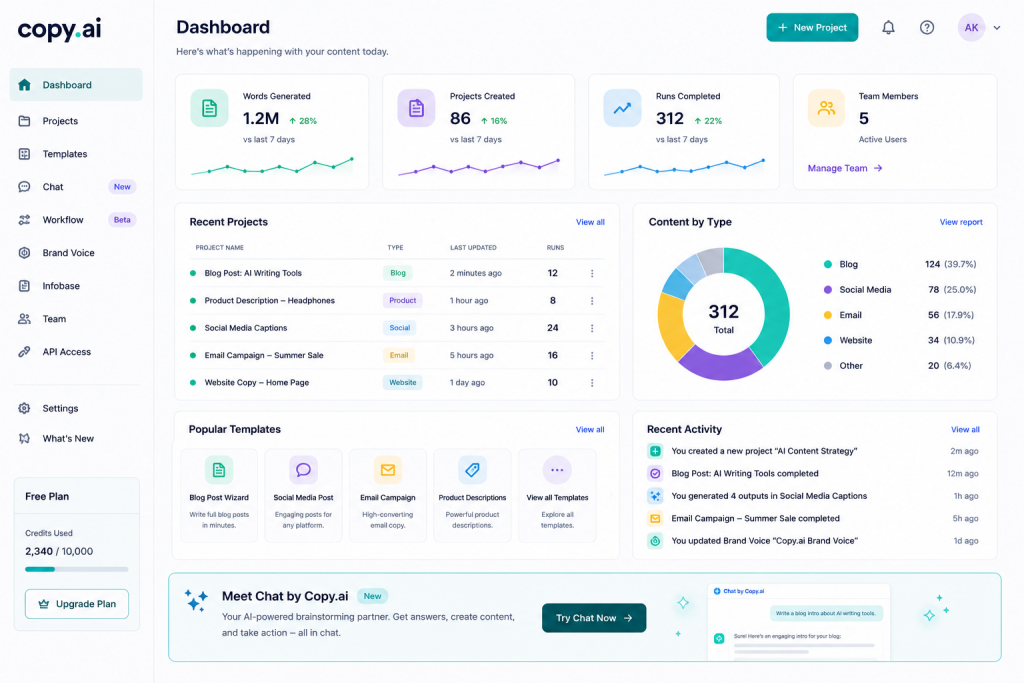
Copy.ai focuses on short-form marketing content such as ad copy, product descriptions, and social media captions. Its workflow builder helps teams generate campaign messaging faster.
If you’re comparing workflow-based copywriting tools, see our detailed guide on Copy.ai alternatives
This makes it particularly useful for marketing departments running multiple campaigns simultaneously.
Key Features
• marketing copy templates
• workflow automation
• campaign messaging tools
• idea generation assistant
• email sequence builder
Pros
• excellent for short-form copy
• fast output generation
• simple interface
Cons
• weaker long-form writing
• limited SEO optimization
Best For
Campaign marketers producing short-form content.
11. Rytr
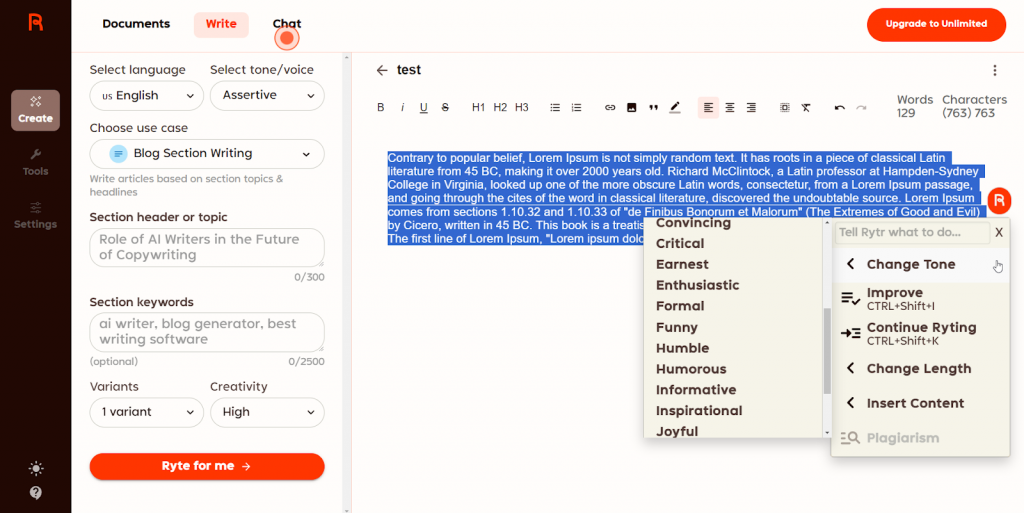
Rytr is a lightweight AI writing assistant designed for speed and affordability. It helps freelancers generate blog drafts, captions, and descriptions quickly without requiring advanced workflows.
This makes it one of the most accessible AI writing tools available today.
Key Features
• blog outline generator
• tone selection tools
• short-form content templates
• rewriting assistant
• multilingual support
Pros
• budget-friendly
• easy setup
• fast generation speed
Cons
• limited advanced features
• shorter output depth
Best For
Freelancers and beginners starting with AI writing.
12. Anyword
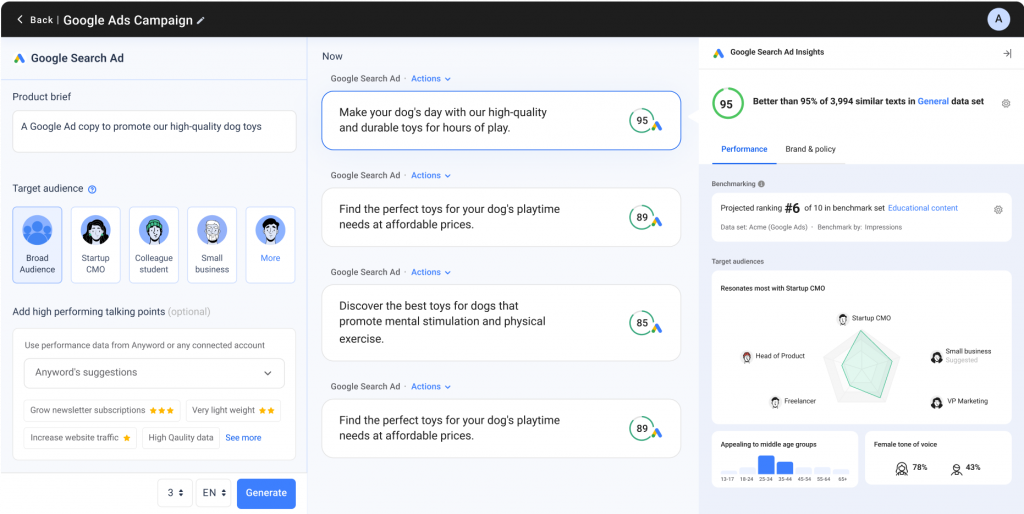
Anyword focuses on performance-driven marketing copy by predicting which variations are likely to convert better. It helps marketers test messaging before launching campaigns.
This makes it particularly useful for paid advertising workflows.
Key Features
• predictive performance scoring
• campaign copy generation
• ad variation testing
• landing page copy suggestions
• audience targeting insights
Pros
• conversion-focused writing
• strong ad workflow support
• predictive analytics features
Cons
• learning curve initially
• higher pricing tier
Best For
Performance marketers running paid campaigns.
13. QuillBot
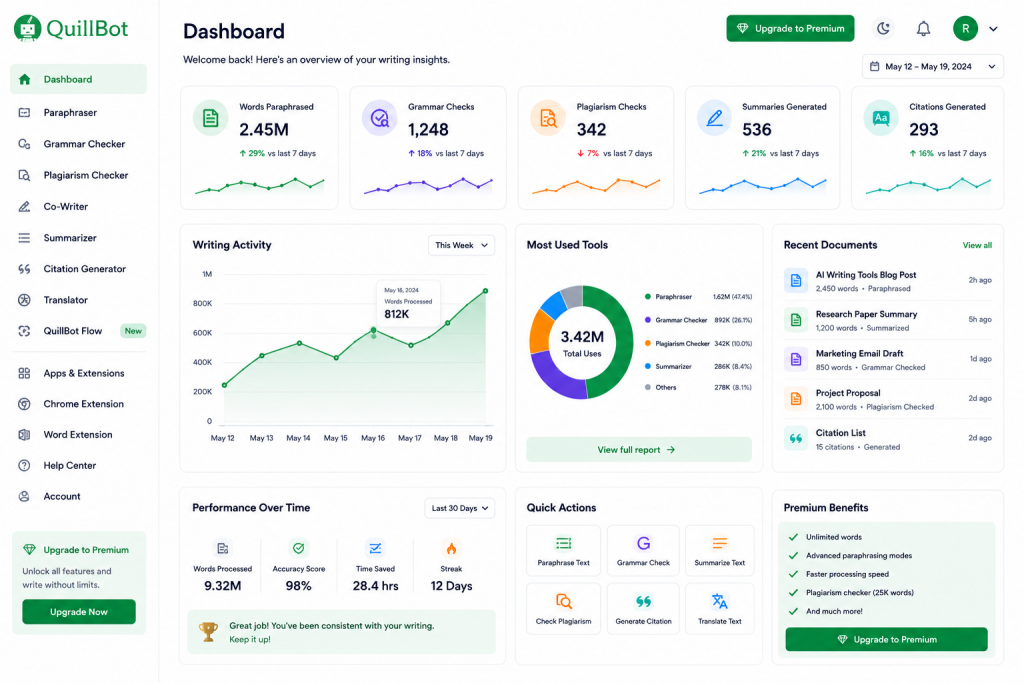
QuillBot helps marketers rewrite existing content quickly while improving readability and tone consistency. It works especially well during editing and refinement stages.
This makes it a useful companion tool alongside primary AI writers.
Key Features
• paraphrasing engine
• grammar correction
• tone adjustment tools
• summarization support
• citation assistant
Pros
• excellent rewriting accuracy
• fast editing workflow
• free plan available
Cons
• not a full content generator
• limited SEO features
Best For
Editors refining drafts before publishing.
Choosing Between Jasper, Writesonic, and Copy.ai?
See how these tools compare before picking the right one.
👉 Compare AI Writing ToolsBest AI Social Media Marketing Tools
14. Predis.ai
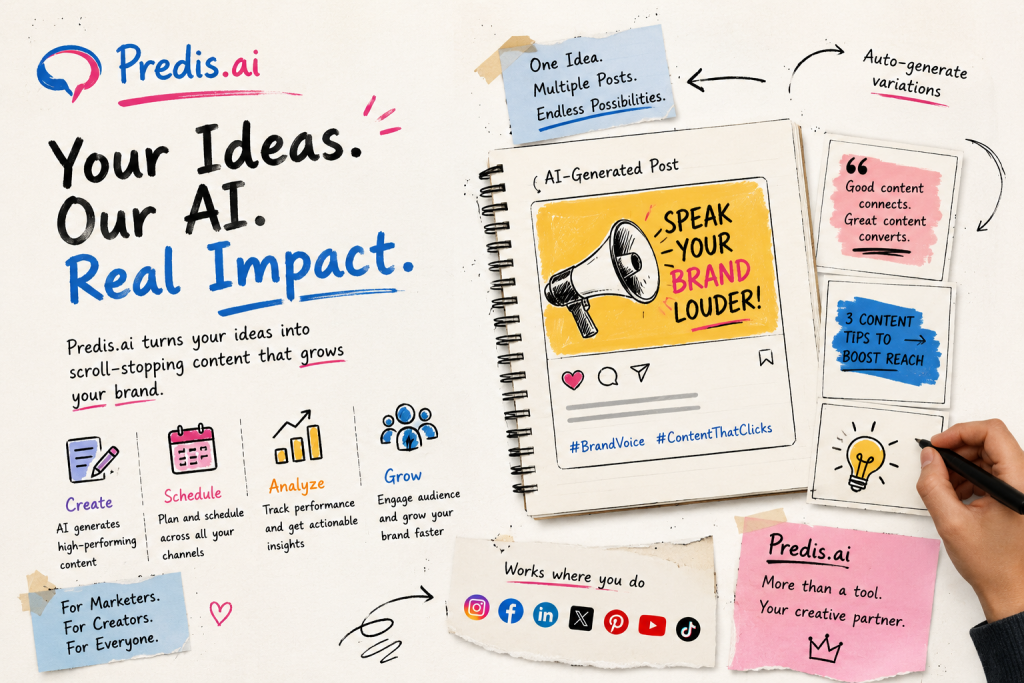
Predis.ai automates social media post creation using AI-generated captions, visuals, and hashtag suggestions. It allows marketers to maintain consistent posting schedules with minimal manual effort.
This makes it ideal for brands managing multiple platforms.
Key Features
• caption generation
• visual post suggestions
• hashtag recommendations
• scheduling tools
• analytics insights
Pros
• saves posting time
• beginner-friendly
• multi-platform support
Cons
• customization limits
• advanced analytics limited
Best For
Social media managers scaling content production.
Marketers focused specifically on search rankings should also explore our comparison of the best AI SEO tools for content optimization.
15. Ocoya
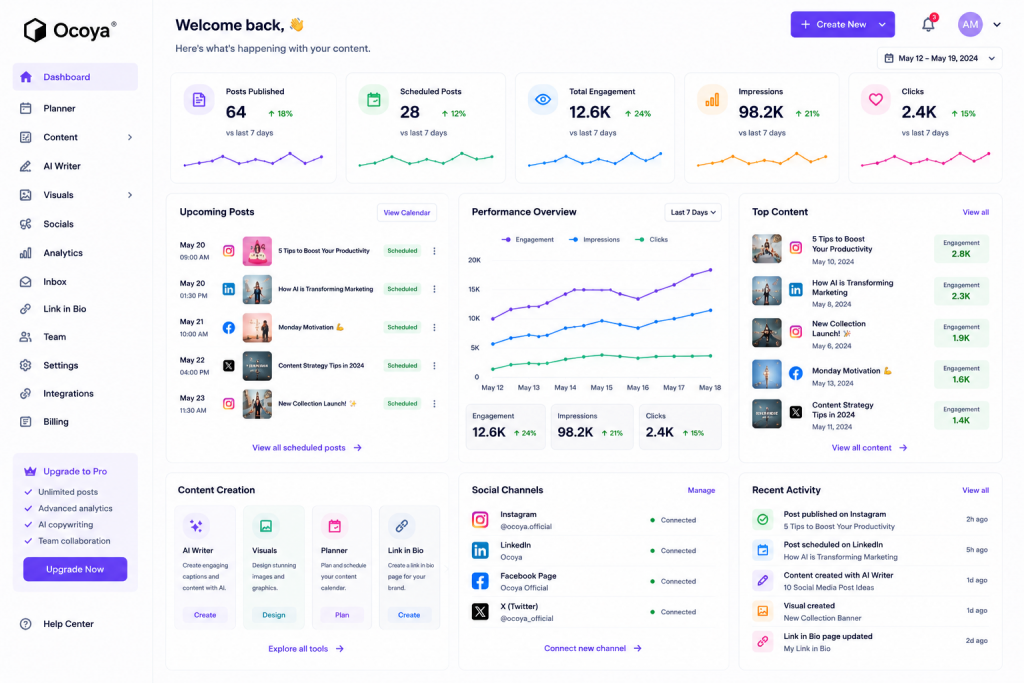
Ocoya combines AI caption generation with scheduling workflows inside one dashboard. It helps marketers streamline social publishing while maintaining engagement consistency.
This reduces the need for multiple scheduling tools.
Key Features
• caption generator
• scheduling calendar
• analytics dashboard
• hashtag suggestions
• design integrations
Pros
• unified workflow dashboard
• simple interface
• saves scheduling time
Cons
• fewer deep analytics
• limited automation depth
Best For
Creators managing social publishing workflows.
16. Buffer AI
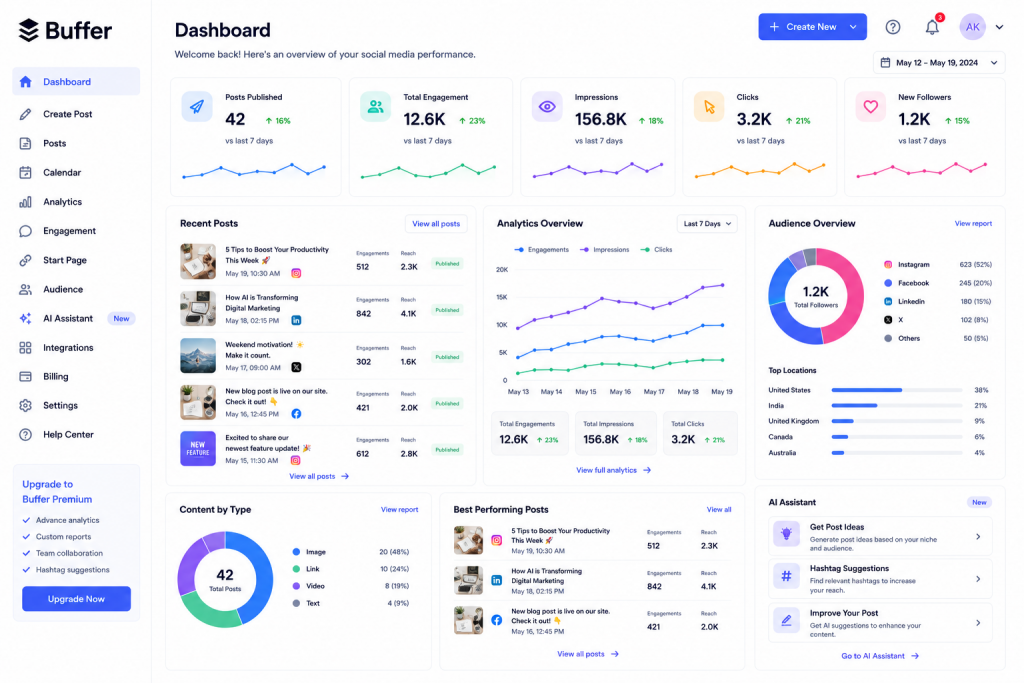
Buffer integrates AI caption suggestions directly into scheduling workflows. It helps teams plan social calendars more efficiently without switching tools.
This makes Buffer especially useful for lightweight social planning.
Key Features
• scheduling calendar
• caption suggestions
• analytics tracking
• team collaboration tools
• engagement insights
Pros
• easy to use
• reliable scheduling
• trusted platform
Cons
• fewer automation features
• limited advanced AI features
Best For
Small teams managing social calendars.
17. Lately.ai
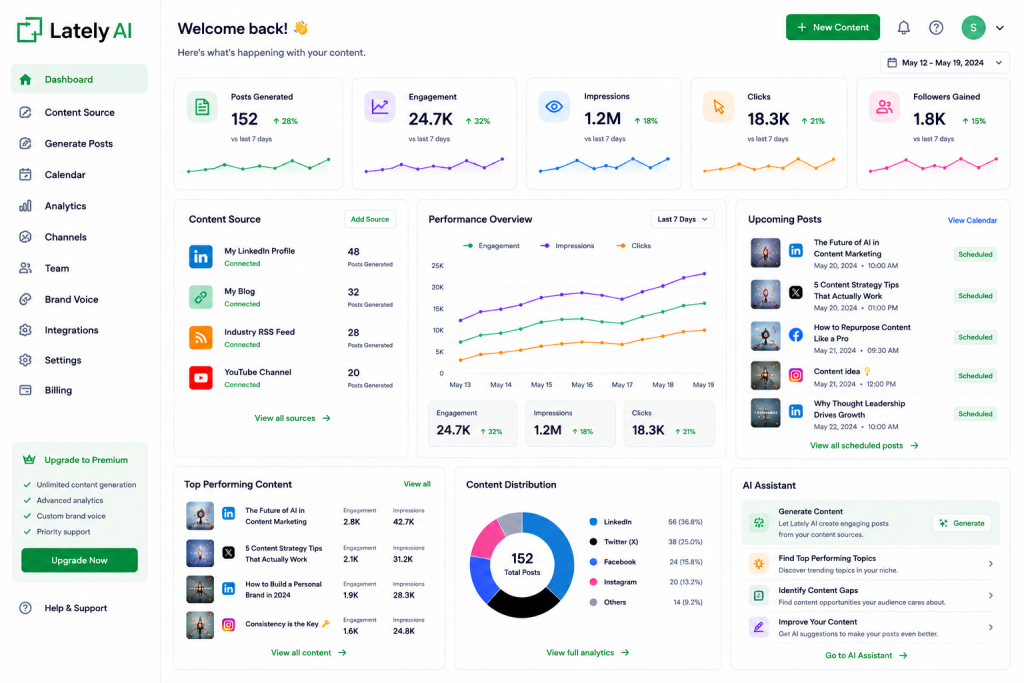
Lately.ai repurposes long-form content into multiple short social posts automatically. This helps marketers maximize content reach without creating new material from scratch.
It is especially effective for content repurposing strategies.
Key Features
• long-form content repurposing
• social caption automation
• analytics insights
• campaign workflows
• scheduling integrations
Pros
• saves content creation time
• improves content reuse
• scalable workflows
Cons
• learning curve initially
• premium pricing
Best For
Brands repurposing blogs into social posts.
Know an AI Tool We Should Add to This List?
We regularly test new platforms and update our recommendations.
Suggest a Tool for ReviewBest AI Advertising Tools
18. AdCreative.ai
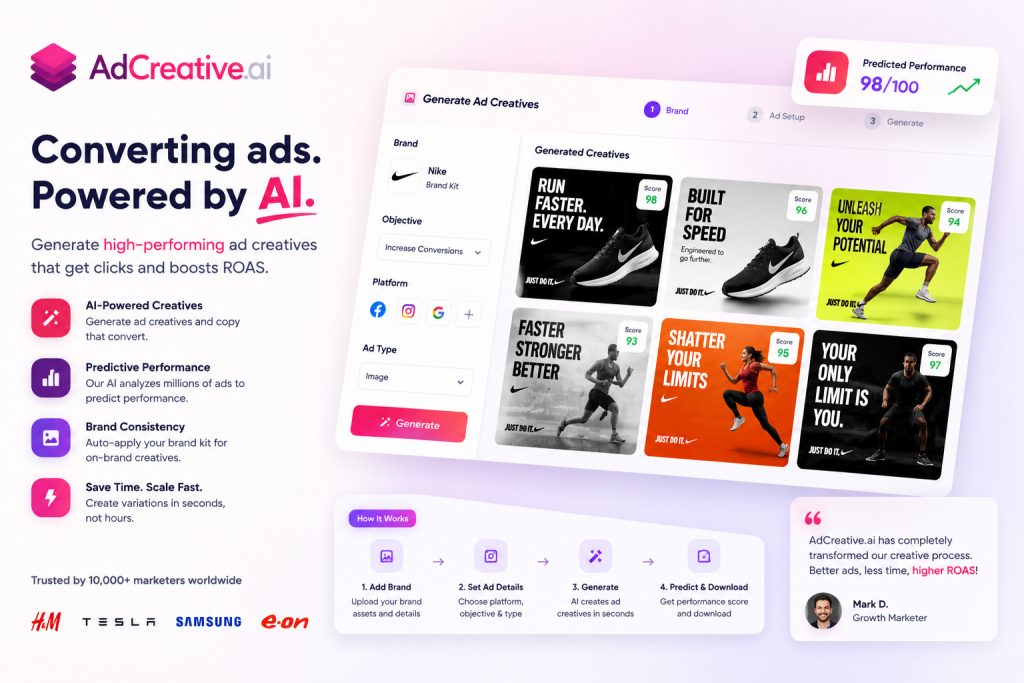
AdCreative.ai helps marketers generate high-performing ad creatives using artificial intelligence. It focuses on producing conversion-optimized visuals and copy for platforms like Facebook, Instagram, and Google Ads.
Instead of designing ads manually, users can quickly generate multiple creative variations that are tailored for performance testing and campaign scaling.
Key Features
• AI ad creative generation
• conversion-focused visual suggestions
• ad copy assistance
• multi-platform campaign support
• performance scoring insights
Pros
• speeds up ad creation workflow
• useful for creative testing
• improves campaign efficiency
Cons
• limited outside paid ads workflows
• requires ad platform experience for best results
Best For
Performance marketers and businesses running paid advertising campaigns at scale.
19. Pencil AI
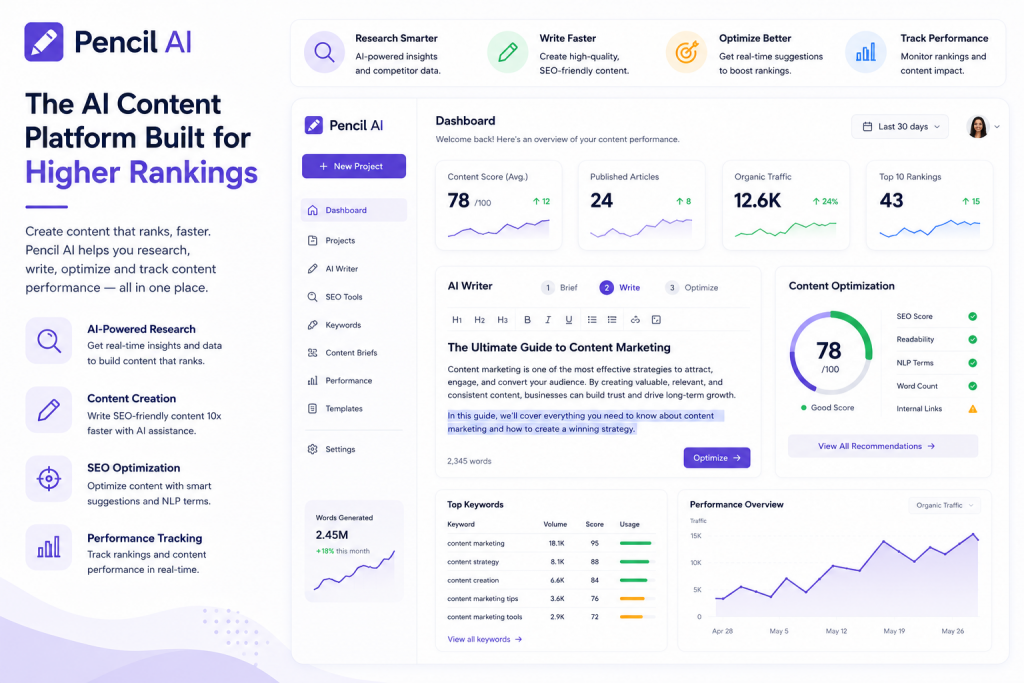
Pencil AI helps teams generate multiple ad variations quickly using machine learning insights. It simplifies the creative testing process by producing variations designed for experimentation.
This makes it especially useful for marketers running frequent A/B tests across campaigns.
Key Features
• automated ad variation generation
• creative testing support
• campaign asset suggestions
• performance optimization insights
• collaboration-friendly workflow
Pros
• speeds up creative testing
• useful for ad experimentation
• supports campaign scaling
Cons
• fewer organic marketing features
• requires ad campaign workflow familiarity
Best For
Growth marketers testing multiple ad creative variations efficiently.
20. Phrasee
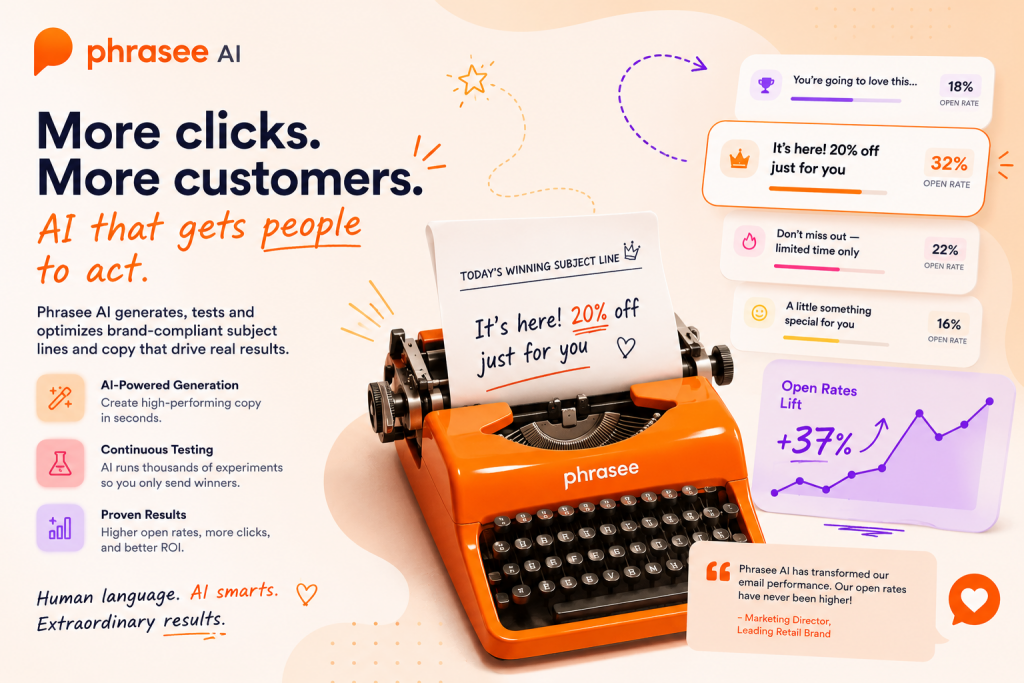
Phrasee uses artificial intelligence to optimize marketing language across email campaigns and digital messaging. It helps marketers generate subject lines and copy that improve engagement and open rates.
Its predictive language engine makes it especially valuable for brands focused on email performance optimization.
Key Features
• AI email subject line generation
• language performance optimization
• engagement prediction insights
• brand voice consistency support
• campaign messaging automation
Pros
• improves email open rates
• enhances campaign messaging quality
• supports brand voice consistency
Cons
• primarily focused on email workflows
• better suited for larger teams
Best For
Email marketers optimizing subject lines and campaign messaging performance.
Best AI Video Marketing Tools
21. Pictory
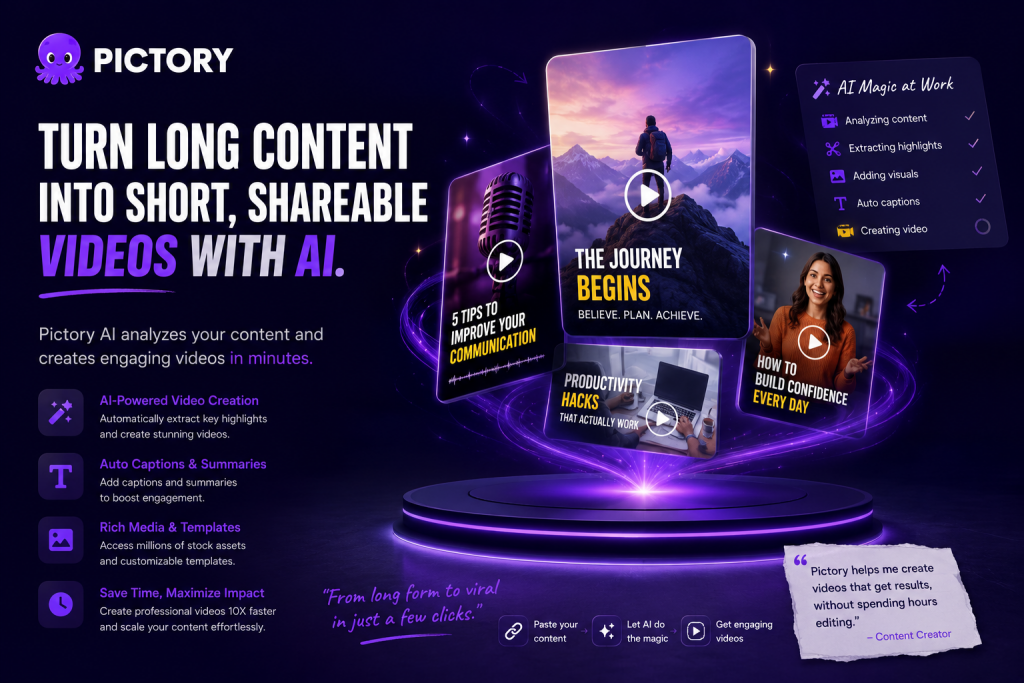
Pictory converts blog content into short videos automatically using AI. It allows marketers to repurpose existing articles into visual formats suitable for social media promotion.
This helps extend content reach without creating videos from scratch.
Key Features
• blog-to-video conversion
• text-to-video automation
• caption generation
• stock footage integration
• social-ready export formats
Pros
• simplifies video creation
• supports content repurposing
• beginner-friendly interface
Cons
• customization options limited
• advanced editing requires external tools
Best For
Content marketers repurposing blog posts into social media videos.
22. Synthesia
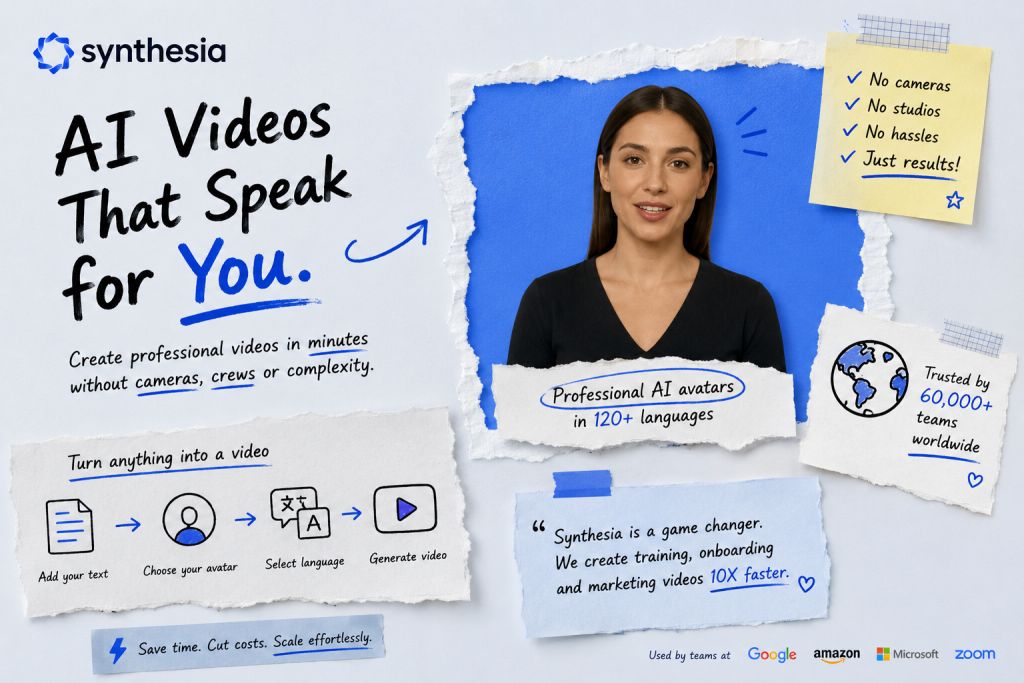
Synthesia enables marketers to create professional videos using AI avatars instead of traditional filming equipment. It allows users to generate training videos, marketing explainers, and presentations quickly.
This makes it especially useful for businesses producing educational and promotional content.
Key Features
• AI avatar presenters
• multilingual voice support
• script-based video generation
• presentation-style video creation
• corporate training workflows
Pros
• eliminates filming requirements
• supports multilingual campaigns
• professional-looking outputs
Cons
• customization flexibility limited
• premium pricing tier
Best For
Businesses creating training, explainer, and presentation-style marketing videos.
23. Descript
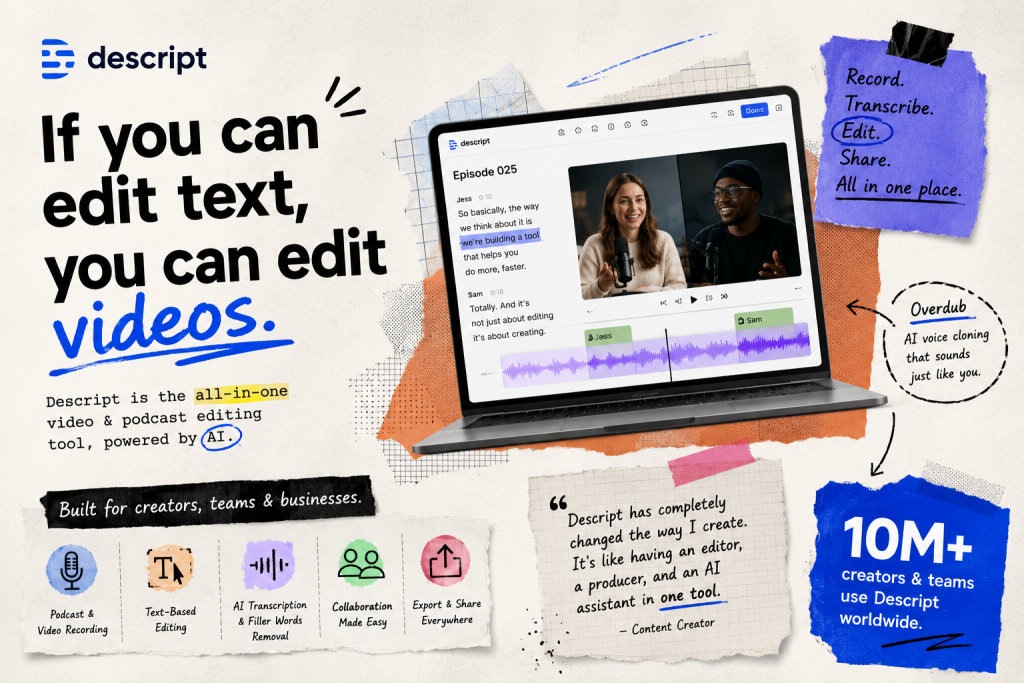
Descript simplifies audio and video editing by allowing users to edit media files using text-based workflows. Instead of timeline editing, marketers can modify content like a document.
This makes it especially popular among podcast creators and video marketers.
Key Features
• text-based video editing
• podcast editing tools
• automatic transcription
• screen recording support
• filler-word removal tools
Pros
• beginner-friendly editing workflow
• powerful transcription accuracy
• supports podcast production
Cons
• advanced editing still limited vs pro tools
• rendering performance varies by device
Best For
Creators editing podcasts, interviews, and marketing videos efficiently.
Tried an AI Tool That Worked Surprisingly Well?
We test tools based on real user workflows. Tell us what you’re using and we may review it next.
Share Your RecommendationBest AI Marketing Automation Platforms
24. Zapier
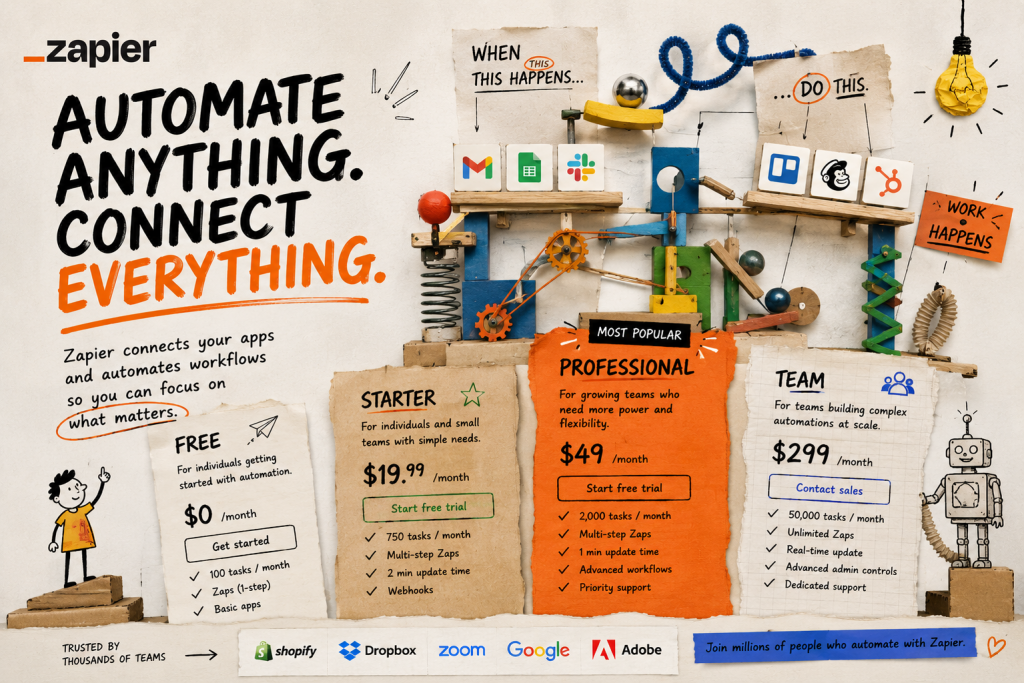
Zapier connects marketing tools together and automates workflows without requiring coding skills. It allows marketers to automate repetitive tasks between apps like CRMs, email platforms, and content tools.
This makes it one of the most flexible automation platforms available today.
Key Features
• app-to-app workflow automation
• no-code integration builder
• trigger-based actions
• marketing workflow automation
• CRM and email platform connections
Pros
• saves manual work time
• supports thousands of integrations
• beginner-friendly setup
Cons
• advanced workflows require paid plans
• complex automations need testing
Best For
Teams automating multi-tool marketing workflows without coding.
25. HubSpot AI
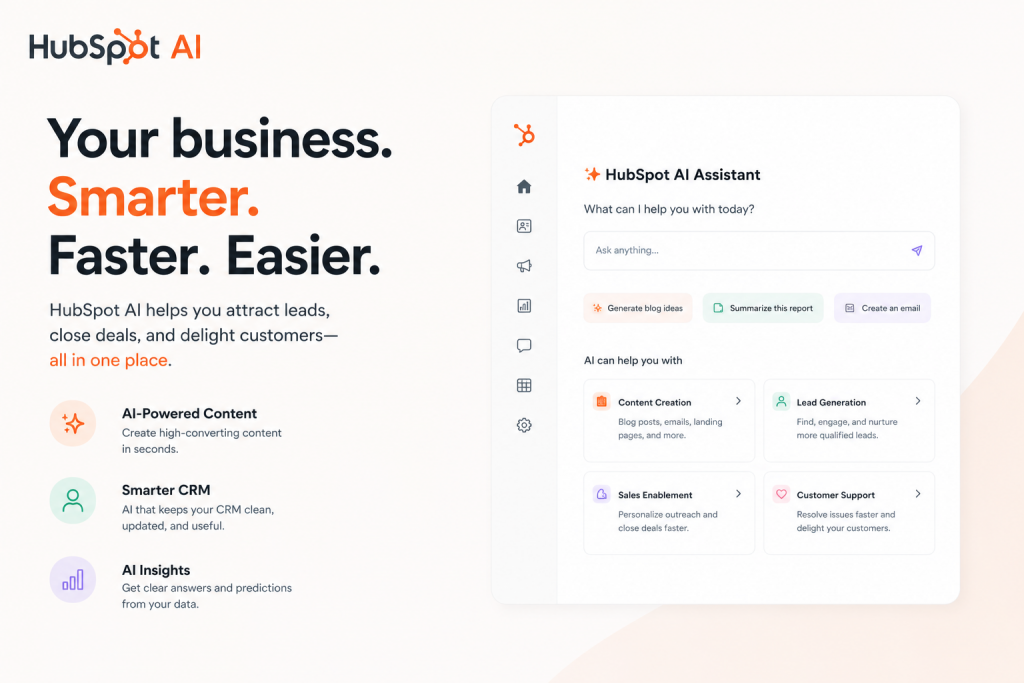
HubSpot AI integrates artificial intelligence across CRM, email marketing, automation workflows, and analytics dashboards. It helps businesses manage marketing pipelines from one centralized platform.
This makes it especially valuable for teams looking for an all-in-one marketing ecosystem.
Key Features
• AI-powered CRM insights
• campaign automation workflows
• email marketing optimization
• lead scoring suggestions
• performance analytics dashboard
Pros
• centralized marketing platform
• strong automation capabilities
• scalable for growing teams
Cons
• advanced features require upgrades
• learning curve for beginners
Best For
Businesses managing end-to-end marketing automation pipelines.
If you’re deciding between leading AI writers, our side-by-side Jasper vs Writesonic comparison explains which tool works best for different marketing workflows.
26. ActiveCampaign
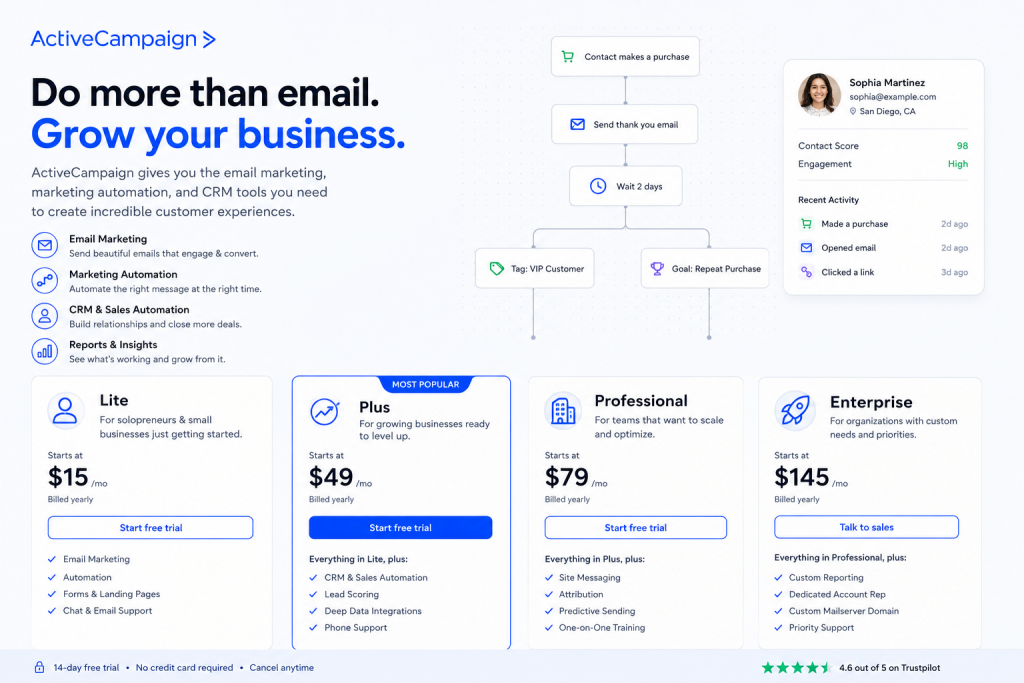
ActiveCampaign helps marketers automate customer journeys using behavior-based workflows. It combines email marketing, segmentation, and automation triggers inside one platform.
This allows businesses to personalize campaigns at scale.
Key Features
• behavioral automation workflows
• email marketing campaigns
• audience segmentation tools
• CRM integrations
• customer journey mapping
Pros
• strong personalization features
• flexible automation builder
• powerful segmentation support
Cons
• interface learning curve initially
• setup requires planning
Best For
Marketing teams building personalized lifecycle email campaigns.
27. GetResponse
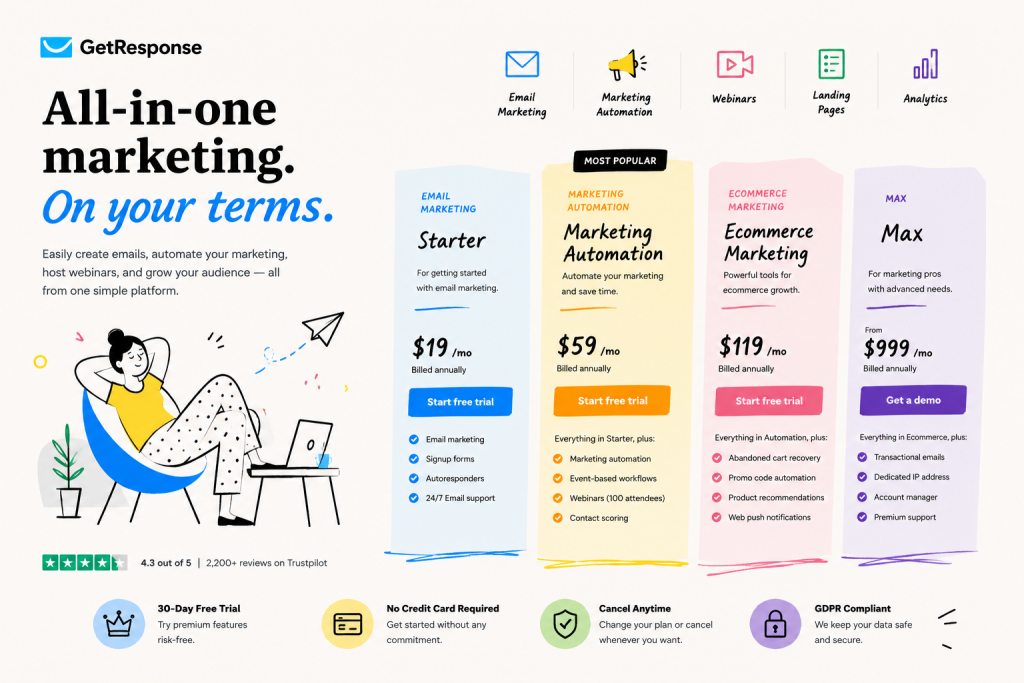
GetResponse combines email marketing, landing pages, webinars, and automation workflows into a single platform. It helps marketers manage lead generation funnels efficiently.
Its integrated campaign builder makes it useful for businesses running conversion-focused strategies.
Key Features
• email marketing automation
• funnel builder tools
• webinar hosting support
• landing page creator
• campaign analytics dashboard
Pros
• strong funnel-building capabilities
• supports webinar marketing
• beginner-friendly interface
Cons
• advanced automation features limited vs HubSpot
• fewer CRM capabilities
Best For
Businesses running lead generation and funnel-based campaigns.
28. Mailchimp AI
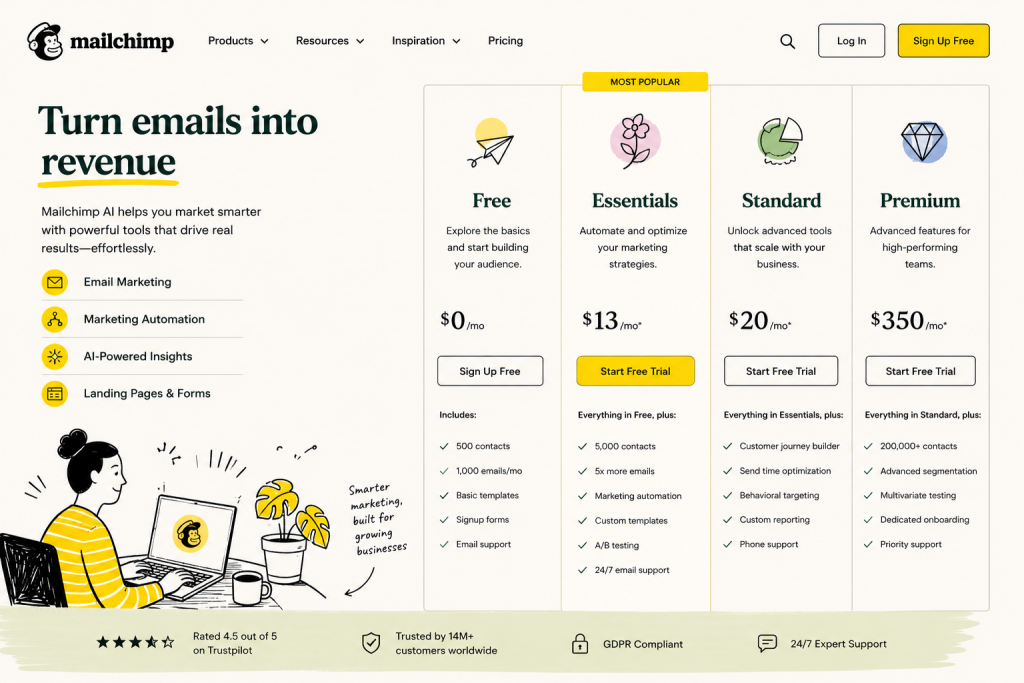
Mailchimp AI enhances email marketing campaigns using predictive segmentation and automation insights. It helps marketers personalize messaging based on user behavior.
This makes it especially useful for businesses managing subscriber engagement campaigns.
Key Features
• predictive audience segmentation
• email campaign automation
• performance analytics insights
• personalization suggestions
• template-based campaign builder
Pros
• easy campaign setup
• strong analytics dashboard
• beginner-friendly interface
Cons
• automation depth limited vs enterprise tools
• advanced features require upgrades
Best For
Businesses managing email marketing and subscriber engagement campaigns.
How to Choose the Right AI Marketing Tool
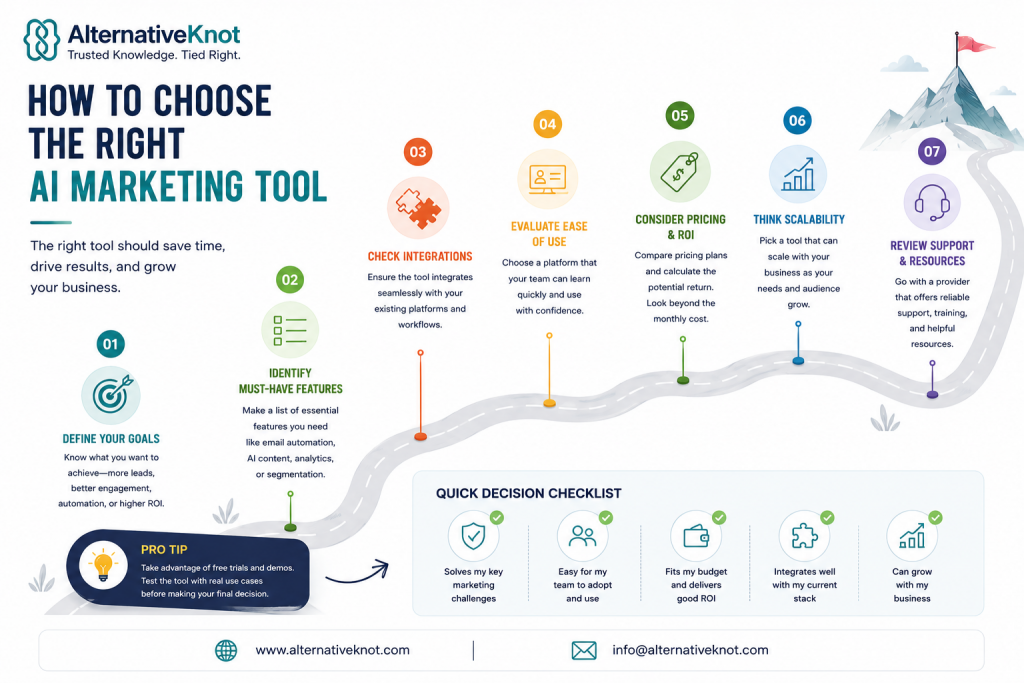
Choosing the right AI marketing tool depends on your workflow priorities.
For SEO-focused workflows:
Choose Scalenut or Surfer SEO.
For content generation:
Choose Jasper or Writesonic.
For social media automation:
Choose Predis.ai or Ocoya.
For automation workflows:
Choose Zapier or HubSpot.
Combining tools across categories often produces the best results.
What’s Your Biggest Marketing Bottleneck Right Now?
SEO? Content writing? Social media? Automation? We’re building guides based on real user challenges.
Tell Us Your ChallengeFinal Verdict
AI marketing tools are no longer optional — they are becoming essential for businesses that want to scale content production, automate campaigns, and improve performance insights efficiently.
Platforms like Scalenut and Surfer SEO help optimize search visibility, while Jasper and Writesonic streamline content creation workflows. Social automation tools such as Predis.ai simplify posting, and platforms like HubSpot integrate entire marketing pipelines into one system. At AlternativeKnot, we regularly evaluate AI marketing platforms to help creators and marketers choose tools that support their workflows and long-term growth strategies.
People Also Ask
AI marketing tools use artificial intelligence to automate content creation, campaign optimization, analytics, and workflow management.
Writesonic and Rytr are beginner-friendly options for content creation workflows.
Yes. They reduce manual work and improve campaign performance through automation and insights.
 CustomGPT.ai
  Frase
Frase  Scalenut